

More people live in cities than anywhere else. According to the World Bank, 56% of the world’s population lives in an urban environment, and it’s predicted that by 2050 this will be 70%.1 While the draw to urban areas is often spurred by employment and lifestyle opportunities, the move to cities is affecting our health. Depending on a city’s density and urban design, it can be hard for its residents to get outside and enjoy some time in nature. One study reports that an ideal urban green space value would be 50 square meters (almost 540 square feet) per person.2 Individually, that is not a lot of space: 540 square feet is around 3.5 times the size of a standard parking space. But added up, the space can cover many blocks.
The relationship between the natural world and our health has been recognized since ancient times. It’s believed that Hippocrates said, “Nature itself is the best physician.” But what do we actually know about nature and human health, including how nature affects people who have cancer?
Green Space Research
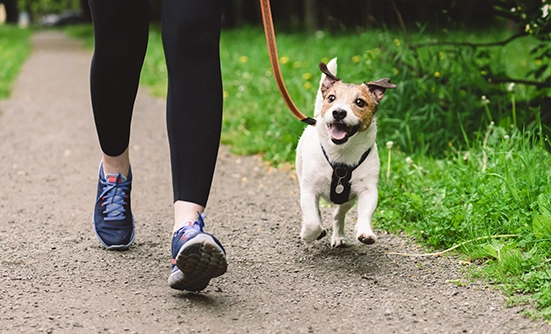
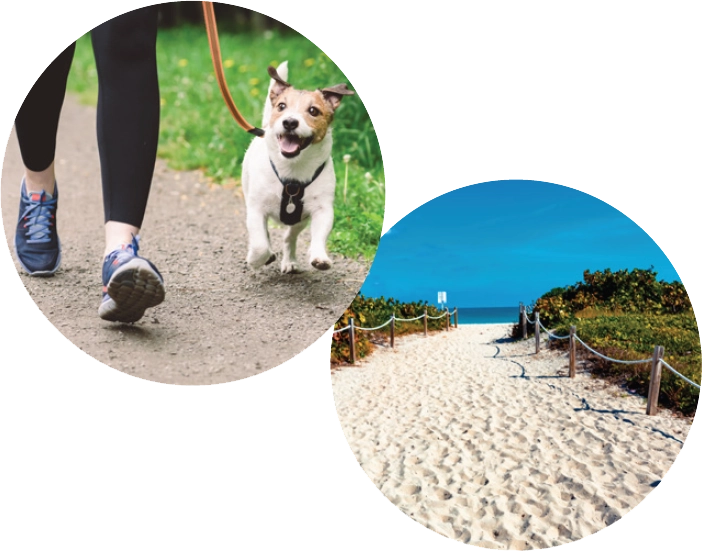
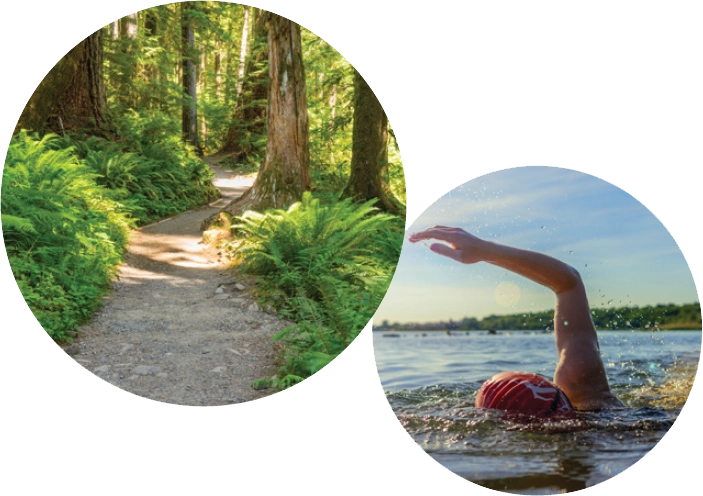
Japan leads the way in green space research. Japan is one of the world’s most urbanized countries. The metropolitan area of its capital, Tokyo, has over 37 million residents, the largest population of all cities worldwide.3 Currently, 92% of all people in Japan live in an urban area.4 For many years, researchers in Japan have been studying the effects of forest environments (“forest bathing,” or “shinrin-yoku”) on human health.5 The name may imply that you have to fully immerse yourself in the forest, but you don’t. Forest bathing includes any activity that you do in a natural environment, be it taking a walk in a park, hiking along a trail, or swimming in a lake.
In a study published in 2022,5 researchers reported that forest bathing affected many factors that can influence a person’s health. People who spent more time in nature showed improvements in:
- Natural killer cell activity, which may help
- reduce the risk of some cancers
- Blood pressure and heart rate, which may lower the risk of heart disease and hypertension
- Stress hormones, which lowered chronic stress, making it more manageable
- Sleep
- Increased serum adiponectin, which may lower the risk of developing type 2 diabetes
- Depression
- Immune system, a boost that makes it easier for the body to fight off viruses and other infections
Vitamin D
We can’t forget that being outside also exposes you to the sun, so your body can get some vitamin D. This essential vitamin helps your body absorb calcium, strengthens your immune system, and helps your nerves carry messages between your brain and body. Studies have shown that people with prostate, lung, colorectal, or ovarian cancer who have higher levels of vitamin D have better survival rates than those with lower levels of the vitamin.6
Given all the warnings about wearing sunscreen to protect your skin from the sun, can you still get the vitamin D that you need? Yes, you can, because although you’re doing your best to block the sun’s harmful rays by diligently applying the sunscreen, some of the UV rays will still get through.7 That said, some people should avoid the sun as much as possible even with sunscreen, especially those diagnosed with skin cancer or taking medications that are phototoxic (phototoxic medicines make your skin and eyes very sensitive to sunlight).8 These include drugs like tetracycline and paclitaxel. If you’re unsure about your medications, speak with your pharmacist, the expert in medications.
How Much Time Outside Is Enough?
Initially, the idea of forest bathing meant spending at least 3 days in the forest; researchers found that people who spent that amount of time in nature carried the benefits for 7 to 30 days.5 Luckily, we don’t need to spend that long outside to get these benefits. Studies show that even 120 minutes a week in nature—either all at once or broken up into smaller periods—provides positive health benefits.9 This could mean working in your garden for a half hour 4 times a week, walking the dog a few times a day every day, or sitting in the park for an hour twice a week. Although most of these studies concern green spaces, blue spaces are just as important.10 This means spending time near or in the water, for example, walking along an urban riverfront or jet skiing on a lake. It’s the experience that counts.
Taking Advantage of the Outdoors
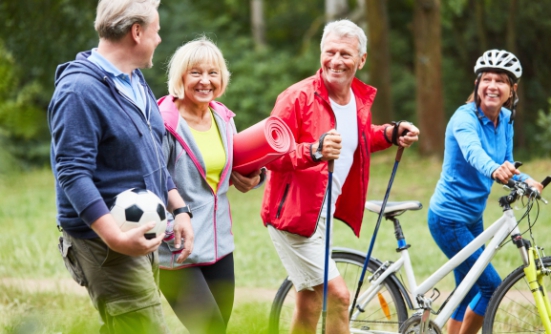
You don’t need to spend hours outside hiking, cycling, or doing other distance sports to benefit from being outside. Here are some ideas:
- Start a garden or join a community garden
- Start or join a cancer survivor walking group in your neighborhood
- Go for a walk in your neighborhood
- Participate in outside yoga, tai chi, or other gentle exercises
- Sit on a park bench and read a book
- Have a picnic
- Sit on your steps and people watch
Can’t get outside? You can still take advantage of nature.
- Get some houseplants
- If you have a balcony, plant a container garden that you can nurture
- Run nature videos on your TV or computer screen
- Put a realistic outdoor screensaver on your computer
- Use a virtual reality nature program
- Hang photos of the outdoors on your walls
Benefits for People Undergoing Cancer Treatments
Since we know that being in nature can help strengthen the immune system, lower blood pressure, and ease anxiety or depression, people with cancer are encouraged to get outside when they can. But since cancer treatments can be overwhelming and exhausting, the idea of going outside for a walk or working in the garden may be too much when you’re not feeling your best. If you find this is the case, the good news is that there are other ways to get that dose of nature until you’re ready to get back outside again.
A study conducted in Brazil showed that people getting cancer treatment who watched 12-minute nature films that focused on beauty felt less pain and were less tired, sad, or anxious than those who either watched nature films with other focuses or didn’t watch any video at all.11
Another study has shown that patients who had ornamental plants in their hospital rooms had lower blood pressure and stress levels.12 Indoor plants not only are pretty or soothing to look at but they can also help remove toxins and dust from the air, making the room healthier overall.13 However, if you are immune compromised and your immune system is suppressed, it’s important to check with your oncologist to determine if having live plants in your living space is a good idea. Some hospitals don’t allow live plants or flowers in units where patients are immunocompromised, especially in the intensive care units and on oncology floors.14
If real plants aren’t an option or you find it hard to care for them consistently, other studies found that just having pictures of the outdoors either in frames on the wall or in a digital frame that changes photos at regular intervals can reduce pain and anxiety.13 If your room has a view of a garden, that’s even better. You could add a nature photo on your phone or tablet’s locked screen, and you can post nature-themed screen savers on your laptop or desktop computer. If you like new technology, you could also explore virtual reality, which can also help. Some researchers found that virtual nature helped combat attention fatigue because it was so relaxing and it helped reduce pain levels.15
Formal Outside Adventures Await
If you would prefer a more organized setting to experience the outdoors or are looking for some outdoors adventure, some patient advocacy organizations and other groups provide these opportunities. Check with your cancer center for possible day or overnight activities, some of which are free to survivors. Here are some examples:
- Epic Experience, Colorado: Programs that include weeklong camps and regional meetups www.epicexperience.org/
- Camp Koru: For young adult cancer survivors www.projectkoru.org/camp-koru
- Camp Mak-A-Dream: For individuals and families affected by cancer www.campdream.org/
- Happiness Is Camping: For children with cancer and their siblings www.happinessiscamping.org/
- Roundup River Ranch: For children with serious illnesses https://roundupriverranch.org/
Benefits for Cancer Survivors
People who survive cancer know that there are issues, both physical and mental, that can last long past the final treatments. Twenty-five percent of survivors say that they experience depression, anxiety, or stress.16 Even if the distress isn’t constant, it can pop up at various times, for example when you have to go for a follow-up scan or if you don’t feel well and you aren’t sure why. Standard recommendations to help survivors cope with these issues include joining support groups, doing cognitive behavior therapy, learning stress management techniques, and taking medications.17 But, we can’t forget the power of the outdoors, which should be added to this list.
The combination of physical activity and being outside adds another benefit to green spaces. People who do at least 1 physical activity a week while they’re outdoors are about half as likely to experience poor mental health than people who don’t do any type of physical activity outside; even more, for every extra outside activity per week, their risk drops another 6%.10 The nature effect is so powerful, studies have shown that larger areas of urban green spaces, as well as rural woodland, may be linked to lower suicide rates.18
Reduced Green Spaces Can Increase Health Risks Overall
Urban areas have a higher number of certain types of cancer, like breast cancer, than rural areas, as well as higher mortality rates.19 One study of over 4,000 women found that those who lived in urban areas without parks had a higher mortality rate from breast cancer than those who lived near a park.20 Another study with over 2,000 women showed that women who lived in urban areas with green space had a reduced risk of developing breast cancer.21
There are many reasons why the lack of green space could lead to issues that could cause health problems. Air pollution from vehicles, fuel oils and natural gas we use to heat our homes, and chemicals released into the air by manufacturers is not healthy. Other pollutants, for example from forest fires many miles away, can add to the air pollution, resulting in a lingering haze. Scientists have known for a long time that air pollution can increase your risk of developing respiratory infections, heart disease, and lung cancer.22 Noise is another issue that can result from a lack of green space. Prolonged urban noise can increase rates of insomnia and psychological distress.23 And heat islands are a problem too. They occur in areas where roads, buildings, and other types of infrastructure absorb the sun’s heat and send it back into the environment, keeping cities hotter even at night. This can result in people developing heat stroke, dehydration, and breathing problems, especially if they are elderly or very young.
What You Can Do For Yourself
Not everyone lives in an area that offers a lot of green space. Lobbying officials for more parks and access to green space is important, but it takes time to start seeing results. In the meantime you can still take steps to help bring nature to you if you can’t go to nature.
About the Author
Lauri has 25+ years of clinical experience, most recently serving as the medical director of the University of New Mexico’s Integrative Medicine Clinic since 2020. She graduated from Duke University’s Leadership in Integrative Medicine Program and is a board-certified general surgeon in rural Colorado, practicing in multicultural settings. She is involved with the Academic Consortium of Integrative Medicine and Health’s research partner, the BraveNet Collaborative.

About Viver Health (viverhealth.com)
Viver’s Mission is Total Patient Care. Viver develops solutions that blend evidence-based clinical and holistic interventions to improve patient experiences and health outcomes. Our integrative resources address all aspects of a patient’s health, including symptom management, nutrition, and lifestyle guidance.
References
- The World Bank. Urban development. Accessed April 19, 2024. www.worldbank.org/en/topic/urbandevelopment/overview#:~:text=Today%2C%20some%2056%25%20of%20the,billion%20inhabitants%20%E2%80%93%20live%20in%20cities
- Russo A, Cirella GT. Modern compact cities: how much greenery do we need? Int J Environ Res Public Health. 2018;15:2180.
- Our World in Data. Urbanization. City populations; population of the capital city. Accessed April 19, 2024. https://ourworldindata.org/urbanization#:~:text=Population%20of%20the%20capital%20city
- The World Bank. Urban population (% of total population). Accessed April 19, 2024. https://data.worldbank.org/indicator/SP.URB.TOTL.IN.ZS
- Li Q. Effects of forest environment (shinrin-yoku/forest bathing) on health promotion and disease prevention–the establishment of “forest medicine.” Environ Health Prev Med. 2022;27:43.
- National Cancer Institute. Vitamin D and cancer. Accessed April 20, 2024. www.cancer.gov/about-cancer/causes-prevention/risk/diet/vitamin-d-fact-sheet#:~:text=Cancer%20mortality.&text=Similarly%2C%20an%20analysis%20of%20approximately,the%20lowest%20category%20
- Skin Cancer Foundation. Sun & Skin News. Sun protection and vitamin D. Accessed April 20, 2024. www.skincancer.org/blog/sun-protection-and-vitamin-d/#:~:text=In%20fact%2C%20the%20prevail ing%20studies,UV%20rays%20reach%20your%20skin
- Zhang AY. Drug-induced photosensitivity. Medscape. Updated September 18, 2020. Accessed April 20, 2024. https://emedicine.medscape.com/article/1049648-overview
- White MP, Alcock I, Grellier J, et al. Spending at least 120 minutes a week in nature is associated with good health and wellbeing. Nature. Scientific Reports. June 13, 2019. Accessed April 20, 2024. www.nature.com/articles/s41598-019-44097-3
- Barton J, Rogerson M. The importance of greenspace for mental health. BJPsych Int. 2017;14:79-81.
- Catissi G, de Oliveira LB, da Silva Victor E, et al. Nature photographs as complementary care in chemotherapy: a randomized clinical trial. Int J Environ Res Public Health. 2023;20:6555.
- Park S-H, Mattson RH. Ornamental indoor plants in hospital rooms enhanced health outcomes of patients recovering from surgery. J Altern Complement Med. 2009;15:975-980.
- Thompson R. Gardening for health: a regular dose of gardening. Clin Med (Lond). 2018;18:201-205.
- Northeast Georgia Health System. Did you know flowers are not allowed in some hospital units? June 16, 2021. Accessed April 20, 2024. www.nghs.com/2021/06/16/did-you-know-flowers-are-not-allowed-on-some-hospital-units#:~:text=For%20example%2C%20intensive%20care%2C%20oncology,cause%20additional%20infection%20and%20illness
- Li H, Zhang X, Wang H. Access to nature via virtual reality: a mini-review. Front Psychol. 2021;12:725288.
- Olson ERT, Olson AA, Driscoll M, Vermeesch AL. Nature-based interventions and exposure among cancer survivors: a scoping review. Int J Environ Res Public Health. 2023;20:2376.
- National Cancer Institute. Helping cancer survivors cope with cancer-related anxiety and distress. April 30, 2020. Accessed April 21, 2024. www.cancer.gov/news-events/cancer-currents-blog/2020/cancer-survivors-managing-anxiety-distress
- Bolanis D, Vergunst F, Mavoa S, et al. Association between greenspace exposure and suicide-related outcomes across the lifespan: a systematic review. Sci Total Environ. 2024;906:167451.
- Duke Health. News & Media. Urban environmental exposures drive increased breast cancer incidence. Updated November 20, 2023. Accessed April 21, 2024. https://corporate.dukehealth.org/news/urban-environmental-exposures-drive-increased-breast-cancer-incidence
- Keegan TH, Shariff-Marco S, Sangaramoorthy M, et al. Neighborhood influences on recreational physical activity and survival after breast cancer. Cancer Causes Control. 2014;25:1295-1308.
- O’Callaghan-Gordo C, Kogevinas M, Cirach M, et al. Residential proximity to green spaces and breast cancer risk: the multicase-control study in Spain (MCC-Spain). Int J Hyg Environ Health. 2018;221:1097-1106.
- World Health Organization. Health consequences of air pollution on populations. November 15, 2019. www.who.int/news/item/15-11-2019-what-are-health-consequences-of-air-pollution-on-populations#:~:text=It%20increases%20the%20risk%20of,people%20who%20are%20already%20ill
- Mucci N, Traversini V, Lorini C, et al. Urban noise and psychological distress: a systematic review. Int J Environ Res Public Health. 2020;17:6621.