



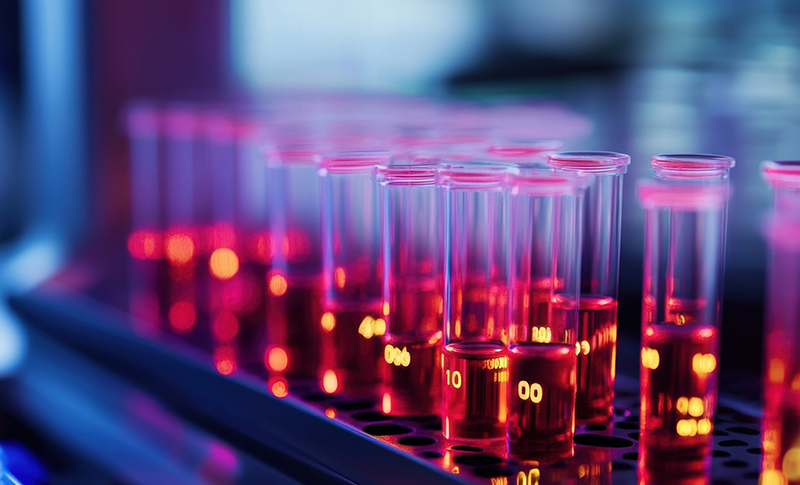

Liquid biopsy is a laboratory test performed on blood or other body fluids to detect cancer-related information in the body. These tests analyze DNA, RNA, or other genetic material shed by tumor cells into the bloodstream. This approach is especially valuable in oncology, as cancer is driven by changes—or mutations—in DNA. For cancer to develop, there must be an error in the instructions encoded in our DNA. DNA serves as a blueprint that our cells follow when replicating. Cancer arises when a group of cells begins to follow faulty instructions, leading to uncontrolled cell growth.1 These changes, called genomic alterations, can disrupt normal cellular processes and lead to the formation of tumors. Some are inherited (germline), while others (somatic) arise from environmental exposures, such as carcinogens, or from random mistakes during cell division. When treating solid tumors such as lung, breast, and colorectal cancers, it is crucial for oncologists to identify the specific genomic alterations driving each patient’s disease. This process is sometimes referred to as biomarker testing, or molecular profiling.
Key Points
- Blood-based biomarker testing complements tissue-based methods, enhancing the detection of targetable biomarkers
- Liquid biopsies may be the way to personalized care for patients with cancer
- These tests can help track a patient’s response to treatment
- Blood-based cancer screening tests are available; talk to your provider about your options
Cancer is highly complex, and decades of research have shown that each tumor can have a distinct molecular profile. Understanding this profile helps guide personalized treatment decisions—identifying which therapies may be most effective, which to avoid, and whether a patient may be eligible for clinical trials. To efficiently capture this information, many providers now use broad-panel next-generation sequencing (NGS), a comprehensive method of tumor profiling. NGS can be performed on either tissue or liquid biopsy samples, each with its own advantages and limitations.
Historically, tumor profiling or biomarker testing relied on tissue biopsies, which are invasive, can lead to complications, and may not be feasible for all patients. Some individuals may be medically unfit for the procedure, or the tissue obtained may be insufficient in quantity or quality for NGS. Even when adequate tissue is available, a single biopsy may not reflect the full genetic diversity of the tumor or its evolution over time. Additionally, tissue-based NGS often has longer turnaround times, potentially delaying treatment decisions.2
For these reasons, liquid biopsy has become a valuable tool in cancer care. Unlike traditional tissue biopsies, liquid biopsies are noninvasive, meaning they only require a blood sample. They also provide fast results—usually in about 7 days.
Liquid biopsies can examine different substances in the blood, such as fragments of DNA released by cancer cells, called circulating tumor DNA (ctDNA). This allows oncologists to detect genetic changes in the cancer, track how the disease is evolving, and identify differences between tumors that have spread to other parts of the body. However, liquid biopsy does have some limitations. The test works by detecting cancer DNA that’s released into the blood, so if the tumor isn’t shedding enough DNA, the results may not be as helpful. Factors such as the tumor’s location and inherent biology may also affect how much ctDNA is released. Another challenge is the lack of standardization across laboratories, which can lead to inconsistent results and varying experiences. Because ctDNA is often present in very small amounts, there is also a higher risk of false-negative results.3 But most importantly, liquid biopsies can be complementary to tissue biopsies, thus increasing the possibility of uncovering clinically relevant information that might affect treatment decisions when both biopsy types are used together.2
History of Liquid Biopsy
The concept of liquid biopsy dates back to 1869, when Australian physician Thomas Ashworth first observed cancer cells in the blood of a patient who had recently passed away.2 These cells, now known as circulating tumor cells (CTCs), are whole cancer cells that break away from a primary or metastatic tumor and enter the bloodstream.4 Clinical studies have shown that patients with metastatic cancer may have 1 to 10 CTCs per milliliter of blood, while they are rarely detected in healthy individuals or those with benign tumors.4
In 1948, researchers discovered fragments of unbound DNA in the bloodstream—what we now call cell-free DNA (cfDNA).2 These fragments are continuously shed into the blood as cells die through natural processes like apoptosis (a natural process in which the body intentionally eliminates damaged or unnecessary cells to maintain health and proper function) and necrosis (the death of cells caused by injury, infection, or lack of blood flow, often leading to inflammation and damage to surrounding tissues).
When this DNA originates from cancer cells specifically, it is referred to as ctDNA. Unlike CTCs, ctDNA is typically found in higher quantities, making it more accessible for analysis. Between the 1950s and early 2000s, scientists continued to explore both CTCs and ctDNA, testing various hypotheses and refining techniques. From 2000 to 2010, liquid biopsy research transitioned from academic investigation to industrial development. Since 2010, there has been rapid growth and commercialization of liquid biopsy technologies, making them increasingly available in clinical practice.
Today, liquid biopsy plays a valuable role in cancer care—offering a noninvasive way to detect and monitor cancer, guide treatment decisions, and track tumor evolution over time.
Clinical Applications of ctDNA/cfDNA
Liquid biopsy has emerged as a powerful tool in the clinical management of cancer. It can be used for:
- Early detection and screening
- Biomarker identification for treatment selection
- Identification of treatment resistance mechanisms and monitoring treatment response
- Minimal residual disease detection and recurrence monitoring
Early Cancer Detection
Access to cancer screening and early detection tools are essential for improving population health outcomes. However, numerous patient-related barriers, such as the invasiveness of procedures, complex preparation requirements, discomfort, and limited awareness, can reduce screening adherence. It is widely recognized that the most effective screening method is the one patients are willing and able to complete. Blood-based cancer screening methods have demonstrated higher adherence rates, particularly among individuals who are unscreened or not up-to-date. Consequently, there is significant interest in the potential of blood-based cfDNA tests as a noninvasive screening tool to help reduce preventable cancer-related mortality.5
Identification of Biomarkers
Cancer treatment has come a long way, especially for patients with advanced or metastatic solid tumors. In the past, chemotherapy was the main option for these cancers, but it often came with harsh side effects and a negative stigma due to its toxic effects on noncancerous cells in the body.
Today, the rise of precision medicine has transformed treatment options. Advances in biotechnology and targeted therapies now enable more personalized approaches, improving treatment response, reducing side effects, and enhancing overall patient outcomes. However, these therapies are only effective if the tumor harbors a specific biomarker.6
To find specific genetic alterations, providers must analyze the tumor’s genetic profile through biomarker testing. Patients whose tumors carry actionable biomarkers may qualify for targeted therapies. Over the past decade, the FDA has approved a growing number of targeted treatments for various solid tumors. These treatments work in different ways: some block signals that help cancer grow, while others help the immune system recognize and attack cancer cells. Examples of targeted therapies include small molecule inhibitors, monoclonal antibodies, and antibody-drug conjugates (ADCs), each with a distinct mechanism of action that inhibits cancer cell growth or induces cancer cell death.6
In oncology, targeted therapy refers to treatments designed to interfere with specific genes or molecular pathways driving cancer progression. Research consistently shows that patients who receive biomarker-informed therapy have better outcomes than those who receive nontargeted treatment. For over 28 years, the National Comprehensive Cancer Network (NCCN) has been a trusted authority in the oncology community, developing evidence-based clinical practice guidelines used across the United States. Today, biomarker testing is included in over 20 NCCN cancer guidelines, with 10 specifically recommending the use of liquid biopsy as a method for genomic profiling.7
Treatment Resistance Mechanisms and Monitoring Treatment Response
As previously noted, one of the key advantages of liquid biopsy is its ability to capture tumor heterogeneity—the genomic variations that can exist across different metastatic sites and that develop over time. This is particularly important in advanced or metastatic disease, where the primary goal of treatment is to control the cancer and inhibit further growth.8
One of the key advantages of liquid biopsy is its ability to capture tumor heterogeneity—the genomic variations that can exist across different metastatic sites and that develop over time.
Targeted therapies can be highly effective in achieving this; however, cancer is adaptive and often develops resistance mechanisms that allow it to bypass treatment. These resistance mechanisms may involve the emergence of new genetic alterations that reactivate cell growth and proliferation.9
As a result, repeat biomarker testing at the time of disease progression is recommended in some instances to detect changes in the tumor’s molecular profile. These insights can help explain why treatment has become less effective and may reveal new actionable targets. In certain cancers, such as non–small cell lung cancer and breast cancer, some resistance mechanisms can themselves be addressed with alternative targeted therapies.10 Thus, unlike traditional tissue biopsy, liquid biopsies are noninvasive, easily repeatable, and may offer valuable insights when the cancer has progressed or returned.
Minimal Residual Disease Detection And Recurrence Monitoring
Questions to Ask Your Doctor About Biomarker Testing
- Is biomarker testing recommended for my cancer type? If so, what tests are they?
- What type of biomarker test was performed? Was it comprehensive to include all of the recommended biomarkers for my cancer type?
- If I experience a progression of disease, do you plan to order a liquid biopsy? Why or why not?
- How would you know if the treatment is working? Could liquid biopsy provide any helpful insights?
In the context of early-stage cancer, ctDNA has emerged as a promising biomarker for detecting minimal residual disease—the microscopic cancer cells that may remain in the body after curative-intent surgery or adjuvant therapy. The presence of ctDNA after treatment can indicate a higher risk of recurrence, identifying patients who may benefit from additional therapeutic intervention, while the absence of ctDNA may support de-escalation of treatment in select cases.11
Although this is an emerging area of research, and not yet widely incorporated into clinical guidelines, ongoing studies are evaluating the utility of ctDNA to guide more personalized, risk-adapted treatment strategies. The goal is to reduce both overtreatment and undertreatment, which remain challenges in early-stage disease management. Furthermore, ctDNA-based recurrence monitoring offers the potential for earlier detection of relapse compared to conventional imaging.11
It is particularly notable that ctDNA can detect residual or recurrent disease when tumor burden is still very low. Small tumors containing approximately 50 million malignant cells can shed enough DNA to be identified in the bloodstream, whereas current imaging modalities typically require tumors to reach 7 to 10 mm in size—corresponding to roughly 1 billion cells—before they become detectable.12 This significant sensitivity advantage positions ctDNA as a potentially transformative tool for post-treatment surveillance and early intervention.
References
- Fonseca-Montaño MA, Blancas S, Herrera-Montalvo LA, Hidalgo-Miranda A. Cancer genomics. Arch Med Res. 2022;53(8):723-731.
- Ma L, Guo H, Zhao Y, et al. Liquid biopsy in cancer: current status, challenges and future prospects. Sig Transduct Target Ther. 2024;9:336.
- The “liquid” biopsy. College of American Pathologists. Accessed May 26, 2025. www.cap.org/member-resources/articles/the-liquid-biopsy
- Domínguez-Vigil IG, Moreno-Martínez AK, Wang JY, et al. The dawn of the liquid biopsy in the fight against cancer. Oncotarget. 2017;9:2912-2922.
- Chung DC, Gray DM II, Singh H, et al. A cell-free DNA blood-based test for colorectal cancer screening. N Engl J Med. 2024;390:973-983.
- Moore DC, Guinigundo AS. Revolutionizing cancer treatment: harnessing the power of biomarkers to improve patient outcomes. J Adv Pract Oncol. 2023;14(suppl 1):4-8.
- Pluchino LA, D’Amico TA. National Comprehensive Cancer Network Guidelines: Who makes them? What are they? Why are they important? Ann Thorac Surg. 2020;110:1789-1795.
- Hiley CT, Swanton C. Spatial and temporal cancer evolution: causes and consequences of tumour diversity. Clin Med. 2014;14(suppl 6):s33-s37.
- Lei Z-N, Tian Q, Teng Q-X, et al. Understanding and targeting resistance mechanisms in cancer. MedComm. 2023;4:e265.
- Pasini L, Ulivi P. Liquid biopsy for the detection of resistance mechanisms in NSCLC: comparison of different blood biomarkers. J Clin Med. 2019;8:998.
- Peng Y, Mei W, Ma K, Zeng C. Circulating tumor DNA and minimal residual disease (MRD) in solid tumors: current horizons and future perspectives. Front Oncol. 2021;11:763-790.
- Ilié M, Hofman P. Pros: can tissue biopsy be replaced by liquid biopsy? Transl Lung Cancer Res. 2016;5:420-423.