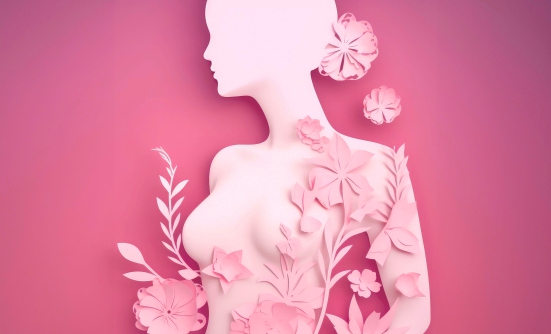


I knew I shouldn’t do it, but I went into Google and searched “sexy.” Hundreds of images appeared, most of them women in some sort of skimpy clothing that displayed a beautiful stretch of perfect cleavage. There were no scars, and no clothing that could disguise an imperfection in (or a lack of) breasts. I used to have a body like that. So did many of you.
There are countless reasons why our bodies (and our minds and emotions too, for that matter) may not be as perfect as they once were. But breast cancer is a really big reason, and often a sudden and profound one. Jennifer, age 28, said, “I lost my hair, lost my breasts, and lost my periods. Weren’t these all the things that defined me as female?” Jennifer is one of many people who helped to answer the question of how breast cancer patients can find their way back to feeling beautiful and like themselves again. I worked with 50 people like Jennifer over a 3-year period in order to collect their answers and stories in a not-for-profit resource book for breast cancer patients.
Collecting the stories and experiences for that book provided all of us with new insights and wisdom. I learned that our experiences as breast cancer patients are both similar and incredibly unique—and therefore one person’s answers may not work for everyone else. However, there do seem to be some shared, foundational stumbling points. Those points have science and studies that explain why they’re hard for most of us. Perhaps combining two of the biggest science points with a few other pieces of advice from the silent breast cancer tribe that exists around you will provide a starting point to help you navigate to a place that feels solid again.
Science Principle #1—Identity Threat
How would you describe yourself to a potential employer? How would you describe yourself to a potential romantic partner? How do you describe yourself in your own head? All of these descriptors help make up our identity…the parts of us that make us who we are and that make us feel valuable. But any major medical diagnosis or injury can threaten those things. Scientific studies have focused mostly on weight and on race when it comes to identity threat, but there are enough studies out there to suggest pretty strongly that the conclusions match when it comes to breast cancer as well.
The key points that science offers are that judgments (perceived or real) from others in regard to our appearance can be debilitating to our confidence and ability to function. When we think that others will believe us to be less than we were, or less worthy of admiration or affection, our anxiety and depression rates can almost double in response to that perceived reality.
Robyn said that every time she looked in the mirror, she felt destroyed. Seeing her scars made her feel like a victim. Other women have been so shattered by the change in their appearance that they wonder if their partners will still be attracted to them, still stay with them at all. That anyone should even ask this is, I think, heartbreaking.
What’s the Answer?
Do you remember when you were a teenager and every time you did or wore something stupid you just knew that everyone was looking and laughing at you? And then came the day, hopefully, when you realized that everyone else was so busy thinking they might be getting laughed at or judged that they really didn’t have time to notice you. Let’s start there. It’s still true. There are more of us than you think walking around with some version of these scars, and fewer people than you think will judge you for it. Five romantic partners (and thanks to my participation in the book, a few thousand strangers) have seen me topless. Everyone was surprisingly good with it.
Joyce: “I sometimes walk down the street and wonder how many women have a prosthesis under their blouse like mine. It’s comfortable to wear, and makes me look like me again. My first year after cancer was spent healing physically, the second year was spent healing emotionally...getting used to my body and the knowledge that I am a whole woman still.”
That doesn’t mean you can’t be kind to yourself by arranging for gentle introductions of your new body into intimate spaces. Laura made sure that her boyfriend saw her mastectomy results while she had her eyes closed. She didn’t want to be watching his face when he saw her for the first time. He was then able to have his reaction first, so he could better support her.
Laura: “At times it was really hard to look at, but through those times I became more aware of my body as something separate from my Self. Although I am much further from society’s ideal than ever, I love my body more than ever for going to war and sacrificing a part of itself so that my soul could live on in this life. My body is my hero returning from battle. I love it with all of its missing parts, scars, and imperfections.”
And Laura’s lesson is the second part of the answer. Who you are to other people is rarely built on your physical features, or on your ability to maintain concentration and a calm demeanor when things are going badly in life. Most of your relationships value you for who you are to them, what you’ve done in your life, what they believe you would do in the future…that is still you. Find the parts of yourself that you can lean on a little harder right now and embrace them. Find and appreciate the many, still intact, parts of you that are loved.
Science Principle #2—Negativity Bias and Seeking Control
Negativity bias simply means that we are trained by evolution to look for problems and to give those negative conclusions more weight (5 times more weight!) than the things that are going well. This works out great for us as human beings if our problem is an attacking bear. This does not work well when our problem is something mostly out of our control, like cancer. When we naturally focus on the things that are going wrong, the disconnect and depression that follow make a tough time even more challenging.
It starts here—realize that life is still happening. And there's nothing like a threat to our lives to make us realize how precious the time we've been given on this earth really is.
So what’s the answer? There are several strategies to help with this one. It starts here—realize that life is still happening. And there’s nothing like a threat to our lives to make us realize how precious the time we’ve been given on this earth really is.
Linda: “Find the thing that is meaningful to you, find the people who can become meaningful to you. Then go live your life. You may have just received a second chance.”
Next, control the things that you can control, and let go of the things that you can’t. Sounds easy when I say it like that, huh? It’s not.
Ashley: “There was a moment that I realized that everything outside of me was completely out of my control. I was going to die someday. Be it from skydiving, cancer, or old age, I was going to die someday, and I could face that reality kicking and screaming or jumping and laughing.”
I’ve found the most helpful thing I can do to reframe things when I’m feeling out of control is to write out a list of the things that I most wish would happen. I look at that list, give myself time to grieve the parts that feel like uncontrollable losses, and then make a second list. This new list is the things that I can do to contribute to the outcomes I most want. If I’m scared of recurrence I can make a list of the dietary and exercise changes I’m going to implement to strengthen my immune system. If I’m scared of feeling like I’m no longer as attractive a person, I can commit to going to a make-up workshop for people undergoing chemo, or I can promise myself a small budget and an afternoon with a good friend to go shopping for some new things that will work with my new body and still make me feel pretty.
The last part of addressing the negativity bias is this: take time every day to focus and call out a few of the things that are going well. Maybe that’s your support people, maybe that’s a medication that’s controlling your symptoms better, maybe that’s just living in a time when so many treatments are available that weren’t known of before, giving you the best possible chance to make it through this. A great many studies have looked at the power of gratitude; it is the single biggest quick thing you can do to increase your happiness and well-being. Gratitude and connection with others matter.
Jeanna: “I am learning that in order to stay healthy I have to take care of myself first. Only then can I care for the people I love. I have also learned that to refuse the help of others is not a favor to them. It is a blessing to give AND receive. In fact, by denying the help of friends and family I may be cheating them out of blessings.”
We don’t get to choose what happens to us in life (because who would ever choose this?). But we do get to choose how we respond to it. So, my last piece of advice is to respond to it and to yourself with compassion. You are still you. Do your best to face this as your best version of you, and know that there are others around you who want nothing more than to help you do just that. In the meantime, now is an opportunity for you to be kind to yourself, to be gentle with yourself. Like Laura, who found a way to stop treating her body as an enemy that had betrayed her and instead found a way to think of it as the hero who defended her so that she could have a second chance at life, find and appreciate your strength. Like Robyn, who designed and created a guardian-style dragon tattoo that encapsulated her scars, find a way to reclaim your body…find a way to see not what cancer did to you, but what you did with cancer.
It may take time. But sometimes what opens our eyes to our own true beauty is looking death in the face when given a life-threatening diagnosis like cancer. We are not loved for our perfect bodies; we are loved for our hearts. We are not lessened by our scars; we are made more complex and stronger by them. We are not admired for our flat bellies so much as we are adored for the gifts of time and attention that we give to others. The sooner we realize these things, the sooner we can appreciate ourselves and the joy that life offers us. I wish for you the silver lining in this experience. I wish you the joy that comes with that discovery.
Kitty: “I wish someone would have told me that life actually would go back to being a pleasure. Your fear of return will decrease with each passing day. Hang in there, little baby steps, just one foot in front of the other; but you WILL get better and you will laugh again.”
Source
Carey K. Beauty After Breast Cancer: 38 Patients Share Bare-Chested Portraits and Tips for Recovery. No Scars No Stories; 2015.
About the Author
Katelyn Carey is a nurse, medical educator, and mastectomy patient who was frustrated with the overly clinical information that caused patients to disconnect from their own care. She has connected with international audiences on stage and in the media about the importance of understanding the psychology and social experiences of breast cancer patients, specializing in how addressing psychosocial needs like the fear of losing oneself makes us healthier on a physiological, psychological, and emotional level.