
Even though both of my grandmothers had breast cancer, I never thought I’d have to deal with it, too. My paternal grandma—or Nana, as I called her—had breast cancer for the first time when she was only 30 years old. Years later, she had a recurrence and passed away. We were particularly close throughout my childhood, and I take after her in a lot of ways. I look like her and have a similar personality. I remember she had a prosthetic bra she used to wear, just to try to look normal again, and how it felt when we hugged. My maternal grandmother also had breast cancer but in her more advanced years. Still, it didn’t occur to me that my future could be impacted by breast cancer in any way.
My doctor found my first lump during an annual exam when I was in my 20s. I was newly engaged, and my soon-to-be husband and I wanted to start a family. Having this discovery on top of that was terrifying. I was referred for a mammogram for the first time, and luckily, everything came back normal.
Four years later, we’d gotten married, and I was expecting our second son when another lump was found. It made me think of the future: how long will I be around based on my family history? Will I get to see my kids grow up? Will I get to grow old with my husband?
There was no doubt in my mind that if my results came back positive for any inherited gene mutations known to greatly increase my risk of breast cancer, I was going to take preventive action.
My doctor recommended genetic testing. Sitting in the oncologist’s office at the precipice of my own journey, I started to really connect with what Nana went through and the impact it had. Back then, breast cancer was such a taboo topic that she never really opened up about it. And because the disease was not yet understood, she went through it both times with no positive options. There was no doubt in my mind that if my results came back positive for any inherited gene mutations known to greatly increase my risk of breast cancer, I was going to take preventive action—for myself, for my kids, and as a way to honor Nana and how far breast cancer care had come since her passing.
The news came. I was positive for a BRCA2 mutation.
At the top of my to-do list was getting a bilateral mastectomy. Even though I believed it was the right thing to do to significantly reduce my risk of developing breast cancer in the future, I was still scared. I think many women spend time trying to love themselves and their bodies, and one of my biggest fears was, how am I going to feel after this? And will I be able to be okay with whatever the new normal is?
I already knew about postmastectomy chest numbness at this point. I understood that during the mastectomy, when breast tissue is removed, nerves need to be cut and removed too, and that if the nerves aren’t repaired during reconstruction, you lose some or all feeling in your chest. I think of it like going to the dentist and getting your mouth numbed. The numbness feels awkward and disorienting because your mouth doesn’t feel like part of your body, but that lasts only for a few hours. But postmastectomy chest numbness can last a lifetime.
I wanted to be able to feel my kids lay their heads on my chest. I wanted to feel my husband’s embrace when we hug. I wanted to feel like I had a full body, not like there was some foreign object on my chest that I wouldn’t ever be able to get rid of.
This once again brought me back to Nana. At the time she was going through treatment, chest numbness was rarely talked about, nor was it seen as something worthy of addressing. Most patients were told to just feel lucky and grateful to be alive. My Nana and others like her didn’t have the more advanced treatment options for a higher quality of life after breast cancer surgery that we have today. I thought of her attempts to feel normal again, like her prosthetic bra, and it solidified my choice.
I wanted to get breast neurotization, the surgical technique that can potentially restore sensation over time, as part of my reconstruction. I did some research and found a surgeon team trained in the technique and worked with them on my treatment plan.
For several months after my surgery, I got a taste of what living with a numb chest would be like. It’s normal to be numb after mastectomy surgery because many nerves are cut and removed with the breast tissue, and the repaired nerves regenerate slowly, so sensation return isn’t instantaneous. But that didn’t make it any less weird. It was uncomfortable just to get dressed. Water pressure while showering was uncomfortable, too.
As I started to heal and was cleared to start lifting things again, I was excited to be able to pick up and carry my sons. But even though my surgeons prepared me well—I knew it would take several months for sensation to start to return—it was still such a mind game to know I was holding them. I could see myself holding them, but I couldn’t feel that I was.
Going back to work while I was still numb was another adjustment. I’m normally a confident, outgoing person who’s comfortable speaking and presenting in front of large groups. But for several months, I was unconsciously restricting my movements and constantly in my own head. I felt like everyone was staring at me—like they knew I couldn’t feel part of my body—when in reality, only a handful of people knew, and no one was staring. I had not even considered the impact of surgery on my professional career. Still, I can imagine that losing sensation after breast cancer surgery affects many people going back to work.
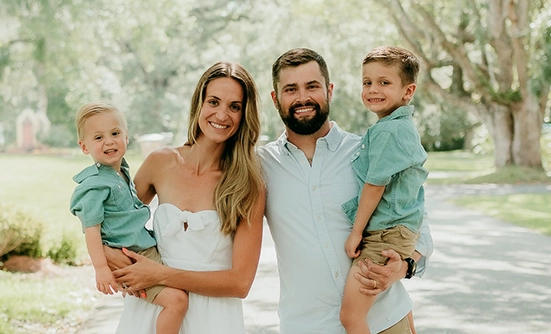
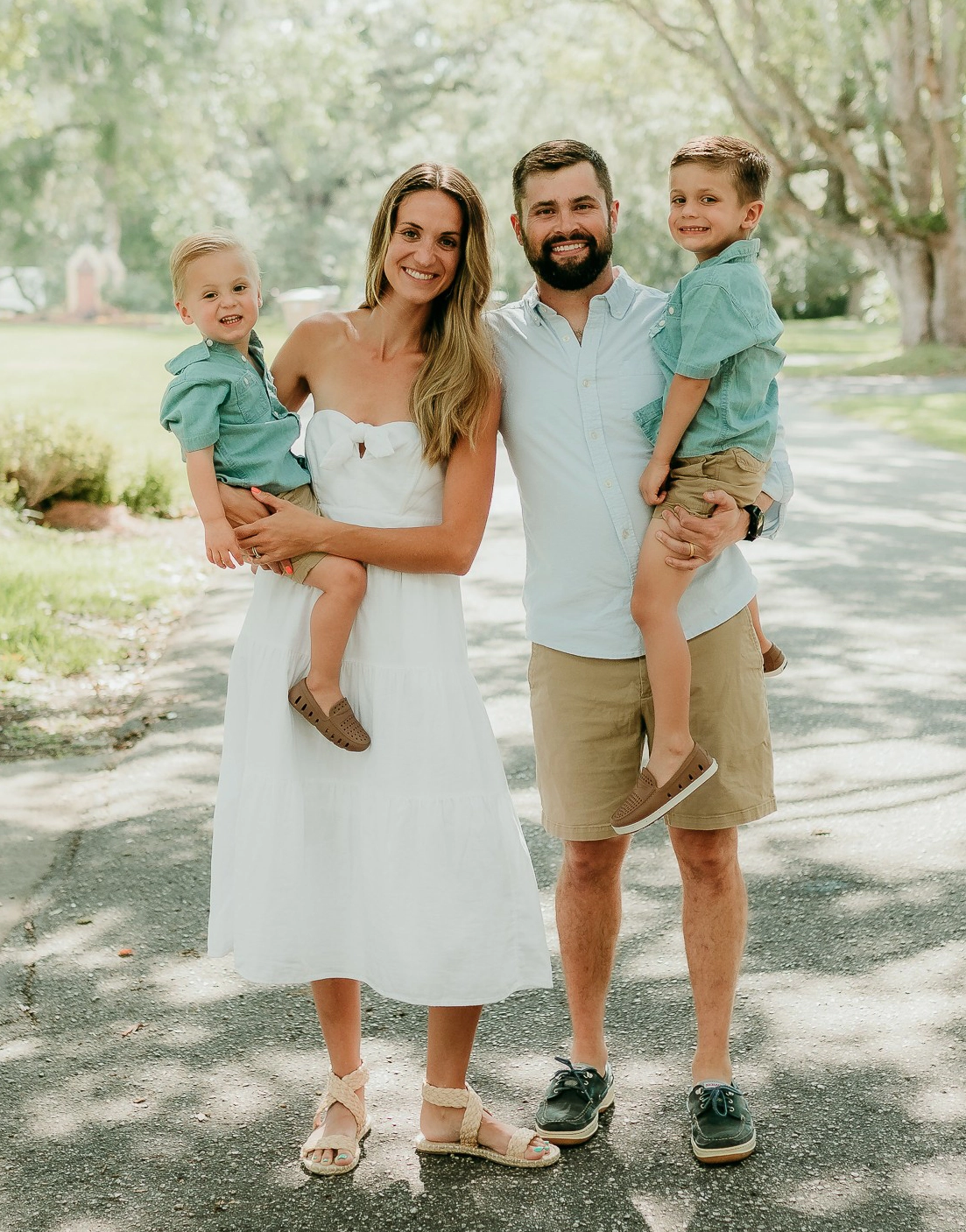
Now a year out from my surgery, I am so happy I knew about breast neurotization so my numbness could be just a several-month stint. I started regaining sensation in my left breast first, and just over the past several weeks, I’ve been feeling more and more sensation return in my right. It’s exciting to be able to feel my sons again when I hold them—even when they’re being rambunctious and rough while playing, sometimes ramming into me with their full little kid force. I’m still getting used to my new body, but my chest feels like part of me now because I can actually experience sensations again.
I consider myself one of the fortunate ones because I knew about my options before I had to make decisions. But I want all people facing mastectomy to know their options and, especially, to know that they don’t have to accept living with a numb chest for the rest of their life. This is why I feel compelled to share my story, and why I work at a company that develops and provides nerve repair solutions for various surgical specialties.
We have the option to feel whole again—not just look whole again. If it’s an option, why not consider it? For those who are interested in learning more, I recommend doing your own research into breast neurotization, talking with others who’ve opted for it and are willing to share their stories, and discussing the specifics of your treatment with your surgeon team.
About the Author
Leanna Mosquera, MEd, CMP, is a previvor, wife, and mother of two. She works at Axogen, where she’s the sales curriculum and training resource manager.