


Breast cancer diagnoses in young women (under age 50) are getting more attention lately, and for good reason. Stories are showing up more often online and on social media as news outlets feature experiences of young celebrities who are facing the challenges of an unexpected diagnosis. Studies continue to report this alarming trend, highlighting a shift that’s gaining serious attention in the research community.
According to the American Cancer Society’s 2025 statistics, breast cancer incidence rates have increased by approximately 1.4% per year in women younger than age 50, compared to a 1% increase for the general female population.1 In 2024, about 50,830 new cases of invasive breast cancer were expected to be diagnosed among women under the age of 50 in the United States. A recent study also reported a nearly 3% annual increase since 2004 in metastatic breast cancer (MBC) in women from ages 20 to 39.2
Black women under 50 face significant breast cancer disparities, including higher incidence rates, later-stage diagnoses, and more aggressive tumor types compared to young White women.3 These trends clearly illustrate a troubling shift—while breast cancer primarily affects older women, it is now impacting a younger generation, with young women in the Black community bearing the brunt of this trend.
While researchers have yet to pinpoint the underlying causes, they’re exploring the possible genetic, lifestyle, and environmental factors that could contribute to a breast cancer diagnosis. In this article, we explore how researchers are addressing some of the unique challenges young women with breast cancer face today. We also highlight some practical steps to lower your risk, as well as the importance of awareness and self-advocacy.
Addressing Unique Biological Risks
Young women at higher risk of breast cancer face a unique set of biological risks that can be easily overlooked by their healthcare providers. Women under the age of 40 are more likely to have dense breast tissue than older women, which can make it harder to detect tumors in the breast on a mammogram. Women with very dense breasts are 4 to 5 times more likely to get breast cancer than women with fatty breasts.4,5 To further complicate matters, many young women are considered too young to be eligible for no-cost annual mammogram screening, a barrier to receiving timely detection and treatment. Because young women aren’t screened, they’re more likely than older women to be diagnosed later and with more aggressive types of breast cancer, including triple-negative breast cancer.
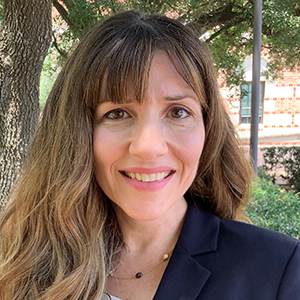
Young women diagnosed with breast cancer are also more likely than older women to carry genetic risk factors for breast cancer, especially in the BRCA1 and BRCA2 genes. Kristen Brantley, PhD, a research investigator at Dana-Farber Cancer Institute, holds a Susan G. Komen grant to investigate how genetic mutations in young women can be linked to higher breast cancer risk and lead to poorer outcomes.
“Expanding our
knowledge about the
biology behind breast
cancer is going to give
us tools to improve early
identification of high-risk
patients. Ultimately, this
knowledge will lead to
more effective therapies
that can be used in the
clinic.”
– Kristen Brantley, PhD
“I’m really interested in connecting risk with progression to target areas for specific intervention,” Dr. Brantley says. “If we can understand the pathways that are at work here, maybe we can get closer to understanding the underlying cause and then find a way to prevent this from occurring.”
Through her study, “Evaluating Germline Genetics and Tumor Genomics of Young-Onset Breast Cancer,” Dr. Brantley is investigating how different hereditary mutations in young women can be linked to higher breast cancer risk and poorer outcomes, including the risk of recurrence and/or breast cancer in the opposite breast. She’s also comparing tumor genetics of women with MBC under the age of 40 to women with MBC over the age of 40. Through this study, Dr. Brantley hopes to better define the relationship between these mutations and tumor progression, and ultimately, to offer more personalized treatment options for young women. “Expanding our knowledge about the biology behind breast cancer is going to give us tools to improve early identification of high-risk patients,” she explains. “Ultimately, this knowledge will lead to more effective therapies that can be used in the clinic.”
Supporting Complex Decisions About Fertility And Reproductive Health
Young women who are diagnosed with breast cancer often face a different set of life challenges and decisions. This season of life is usually all about big milestones like starting a career, committing to a long-term relationship, or having children. But a breast cancer diagnosis can quickly turn even the best laid plans upside down.
Komen Chief Scientific Advisor and medical oncologist Ann Partridge, MD, MPH, has dedicated her career to finding new ways to improve care and long-term outcomes for young women with breast cancer. As the founder and director of the Program for Young Women with Breast Cancer at Dana-Farber Cancer Institute, her work combines research, clinical care, and advocacy to support and empower these patients.
Dr. Partridge’s groundbreaking work has been instrumental in highlighting the unique challenges young women with breast cancer face, especially the impact of treatment on fertility and future family planning. She serves as the lead US investigator on the POSITIVE (Pregnancy Outcome and Safety of Interrupting Therapy for Women with Endocrine Responsive Breast Cancer) trial, which found that young women with hormone receptor–positive breast cancer could safely pause their endocrine (hormone) therapy for up to 2 years to get pregnant.6 Preliminary results of the POSITIVE trial were shared at the San Antonio Breast Cancer Symposium in 2022 and 2023, signaling a huge win for young women who want to have the best treatment outcomes possible without losing the ability to have a child.
“These women don’t want to put their lives on hold,” Dr. Partridge says. “I think the results of our research will provide so much encouragement and inspiration for our young survivors, who often are so downtrodden by both the diagnosis and the aggressive treatments that they often need.”
After getting pregnant, young women also face an increased risk of more aggressive breast cancers during postpartum, including MBC. Virginia Borges, MD, is a medical oncologist at the University of Colorado whose research also focuses on breast cancer in young women, especially cases related to pregnancy and postpartum breast cancer. Young women are at an increased risk of breast cancer for about 10 years after a first birth.7 During this time, a woman’s breasts go through many changes as her body returns to its prepregnancy state. If any hidden cancer cells are present, those changes can make it easier for the cancer to grow or spread.
“Sadly, a lot of young women get diagnosed with pretty advanced stage breast cancer—stage 3, and sometimes even stage 4,” Dr. Borges says. “And we don’t currently have the technology and the drugs available to routinely cure women who have gotten diagnosed with stage 4 breast cancer, so they know they’re going to be facing that for the rest of their lives.”
Easing The Mental And Financial Burdens Of An Early Diagnosis
Beyond the physical challenges, the emotional and mental toll of breast cancer can affect how young women see themselves, connect with others, and approach relationships or intimacy. Dr. Partridge recalls a time early in her career when she saw a close friend struggling with unique questions that followed her breast cancer treatment.
“I saw the experience through her eyes. And it wasn’t just about what treatment to get; it was about a lot of things I had never considered because I’d never been in her shoes. It was about, ‘How do I go out and date my new boyfriend with one breast? How do I dress? Can I have children? Do I have to worry about my genetics?’ It really hammered home to me how different it is for young women.”
Aside from the emotional and physical challenges, young women with breast cancer often face professional setbacks and financial toxicity. With added pressure as they try to build financial stability and establish their careers, they must often take the role of family caretaker. In a recent episode of Komen’s Real Pink podcast, Dr. Borges describes some of these hurdles.
“There aren’t too many people in their 20s, 30s, or even early 40s who are established in their careers or have been working long enough to have a big nest egg,” she says. “Many of these women are also facing things like having to pay off student loans, and some of them have young children already, so they’re also having to navigate childcare and everything else for their families.”

“These women don’t
want to put their lives
on hold. I think the
results of our research
will provide so much
encouragement and
inspiration for our young
survivors.”
— Komen Chief Scientific
Advisor Ann Partridge, MD, MPH
Some of these women are also part of the “sandwich generation,” where they care for their own children, but must also care for parents who are starting to age and starting to develop their own health issues. The lives of these caretakers become a balancing act between their own medical needs, their children, and their parents.
Being diagnosed at a younger age also means a longer period of survivorship following treatment, which can mean a longer time living with difficult emotions and the risk of recurrence. Establishing psychosocial support and other supportive care is key as young women adjust to their “new normal.” As Dr. Partridge observes, this is also a time when young women can make significant improvements to their health.
“If they’re smokers this means quitting smoking. If they haven’t been exercising, we’re getting them to exercise or maintain a healthy body mass index or weight,” she says. “We’re helping these women turn breast cancer into a learning experience so they might even live better beyond the breast cancer and find some silver linings out of an unfortunate event.”

“Exercise is the most
important thing that
every adult on this
planet should be doing
because it reduces the
risk of breast cancer as
well as about 12 other
cancers and diseases.”
— Virginia Borges, MD
Staying Informed And Empowered
While research for young women with breast cancer continues to evolve, helping us to better understand risk factors and identify new treatment options, it’s clear that meaningful progress is on the horizon. And while that progress holds much promise, young women don’t have to wait for future breakthroughs in research to protect their health today. Here are some practical steps that can help lower your risk of breast cancer or find it early.
First, always pay close attention to your body and report any new or unusual changes in your breasts to your doctor right away. Knowing how your breasts normally look and feel is key to noticing early warning signs. Also, learn more about your personal risk by discussing your family history with your doctor. There are helpful risk assessment tools available online at Komen.org that can help you and your doctor make important decisions about future screening and risk reduction.
You can also reduce your breast cancer risk by adopting healthy lifestyle habits, including a healthier diet and exercise. “Exercise is the most important thing that every adult on this planet should be doing because it reduces the risk of breast cancer as well as about 12 other cancers and diseases,” Dr. Borges says.
Above all, be your own advocate. Don’t hesitate to speak up and talk with your doctor about any unusual symptoms or concerns you have. Ask questions, and if needed, get a second opinion. Your voice is a powerful tool in protecting your health, and if you’re a young woman, it just might save your life.
References
- American Cancer Society. Key statistics for breast cancer—How common is breast cancer? Updated May 5, 2025. Accessed August 20, 2025. www.cancer.org/cancer/types/breast-cancer/about/how-common-is-breast-cancer.html
- Hendrick RE, Monticciolo DL. Surveillance, Epidemiology, and End Results data show increasing rates of distant-stage breast cancer at presentation in US women. Radiology. 2024; 313:e241397.
- Shoemaker ML, White MC, Wu M, et al. Differences in breast cancer incidence among young women aged 20-49 years by stage and tumor characteristics, age, race, and ethnicity, 2004-2013. Breast Cancer Res Treat. 2018;169:595-606.
- Ho JM, Jafferjee N, Covarrubias GM, et al. Dense breasts: a review of reporting legislation and available supplemental screening options. AJR Am J Roentgenol. 2014;203:449-456.
- Sprague BL, Gangnon RE, Burt V, et al. Prevalence of mammographically dense breasts in the United States. J Natl Cancer Inst. 2014;106:dju255.
- ClinicalTrials.gov. Pregnancy outcome and safety of interrupting therapy for women with endocrine responsive breast cancer (POSITIVE). Study NCT02308085. Accessed August 15, 2025. clinicaltrials.gov/study/NCT02308085
- Rosner B, Colditz GA, Willett WC. Reproductive risk factors in a prospective study of breast cancer: the Nurses’ Health Study. Am J Epidemiol. 1994;139:819-835.
About the Authors
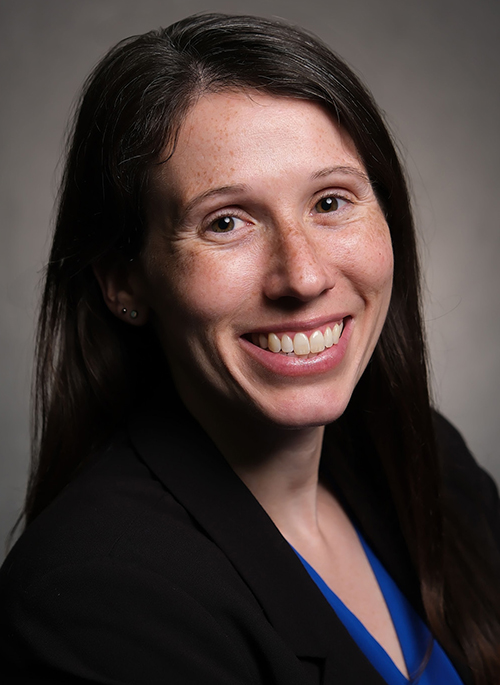
Jennifer Flores, MS, a technical writer for mission education at Susan G. Komen, creates a variety of communications materials, and manages and writes content for Komen’s Spotlight on Clinical Trials series. She is passionate about making scientific data understandable for broad audiences and creating meaningful messages through storytelling.
Kelsey Hampton, PhD, is director of mission education and communications at Susan G. Komen, where she oversees patient education programs designed to make scientific research and clinical trials more accessible, engaging, and actionable for patients. She is a fervent believer in the power of intersecting storytelling with education.