
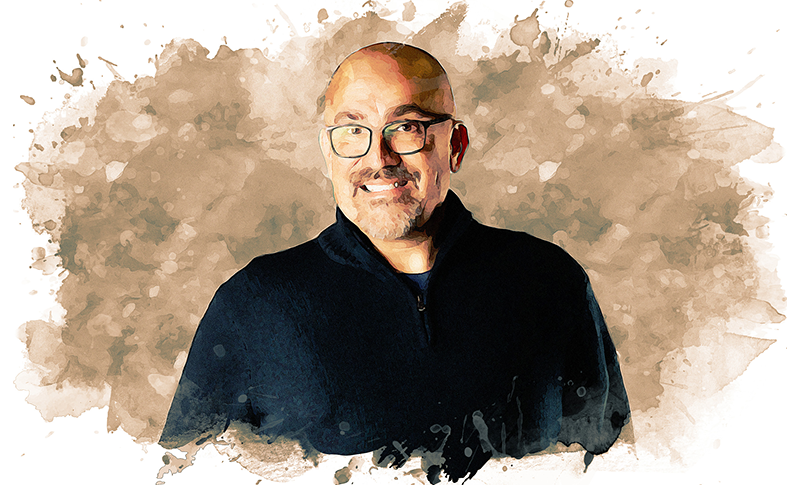

“I’m sorry. We did all we could, but he didn’t make it.” Those are words we hear in movies or TV shows, but in January of 2024, those were the words I heard as I was told about the death of my dad. It was supposed to be a routine procedure. I had been to all the appointments with him hearing that the risks were small, and even if something happened, they could fix it. It was not to be the case. I was standing in the waiting room of the heart center when I was told, and time stopped. I honestly didn’t know what to do. I went through the mechanics of calling my brother and telling him and then the phone call to my 6 children telling them their “Poppy” had died. But I was lost, standing in a desert with no idea which direction to head or how to get out of the place I was in. The month before this happened, I had stepped back into nursing as a nurse navigator in a cancer center. For 5 years before that, I had pastored a church. You would think I would know what to do, where to turn, how to walk through this, but I didn’t. I entered a place of being “unanchored.”
I was finally able to go back to work 10 days after dad died, and I was hit almost immediately with the similarities that cancer patients and those who have lost a loved one have in common. Even this week, I sat with a patient and her 2 daughters who were told she has cancer, and I heard the familiar words of “overwhelmed, scared, unsure, anxious.” As I have pondered this more over the past months, I have begun to realize that cancer patients experience a death of sorts. It’s a death of dreams. A death of certainty. A death of control. And their families experience it all as well. As I worked through the loss of my dad, the idea of unanchored, as I mentioned before, really stuck with me. I found this definition of an anchor: “An anchor is a critical piece of equipment used in maritime activities to secure a vessel to the bed of a body of water, preventing it from drifting due to wind or current. Anchors are essential for the safety and stability of ships, boats, and other watercraft….” (www.predictwind.com/glossary/a/anchor)
That definition of an anchor can easily be transferred over to what cancer patients go through. Before the diagnosis, the anchors they have put down to walk through difficult times have mostly held. The anchors of health and family, financial stability, career, a hope in the future, and a spiritual belief system seemed sure and solid. Now, suddenly and unfairly, those anchors have been pulled up, and the cancer patient is set adrift. Health can no longer be trusted. The cost of treatment puts finances at risk. A career may have to be put on hold to receive treatment. The future that seemed so certain now seems clouded and in doubt. A spiritual belief in a kind and benevolent God is questioned. I am guessing most cancer patients experience at least some of these, and some patients experience even more.
What does it feel like to be adrift? I can speak from my own experiences only. The biggest realization for me was that for those outside of my experience, life just went on like normal. You look out and people are going on like everything is okay, while in your world nothing is okay. They were not unanchored, at least not that I could tell. I was walking through intense loss and grief, but life just went on like normal for most. I do understand that. Even for myself, I didn’t have the opportunity to stop for long. At that time, I was still pastoring a church and working as a nurse. Both of those positions demanded my time and attention. But I wanted to stop and just sit.
Another outcome of being unanchored is that you begin to question what you had believed and put your trust in. If those anchors were not able to hold you fast in this time of need, were they worth putting your time in to begin with? There is nothing wrong with this questioning. There is some value in it if we don’t throw it all out and become despondent. Along with this is an assessment of what is truly valuable. Maybe this could be better thought of as where should I be investing my time and energy? This really moved to the surface after dad died, and I suspect that cancer patients have the same thoughts. All of a sudden, time becomes a commodity that needs to be managed and invested correctly. I had a patient and family who decided to take some trips and spend more time together after the mother was diagnosed with pancreatic cancer, making memories that would last. That patient passed away recently, and I am sure the family is glad they spent the time together.
So, being unanchored is a time when life goes on for those outside of my experience, while I am questioning the anchors I had and considering how I want to invest my time. Being unanchored is a time of uncertainty, and we experience a loss of control. I had no control over my dad dying, and you had no control over the diagnosis of cancer. We are set adrift and seemingly at the mercy of currents and tides. It is hard, it is scary, and we want to get out of it as soon as we can. I don’t know about you, but I hate not being in control. The question now is what anchors need to be put down? I am going to suggest 3 anchors that we all need: community, spirituality, and self-care. Let’s take a quick look at each, starting with community.
You have heard the saying “it takes a village to raise a child.” I would suggest a rewrite of that to say, “It takes a community to walk through life.” Regardless of the circumstance we find ourselves in, good or bad, there is something anchoring about having a community. When my dad died, I had 2 people, one in Texas and one in Pennsylvania, offer to come and be with me if I needed them. I also had a friend from high school who lived locally who stopped in almost daily the first week or two, dropping off food and just offering a hug. That meant more to me than I could express to him. None of these people had an agenda. They just wanted to be with me and offer support. What we need to be careful about when looking for our community are those who want to “should” on us. Those who want to tell us how to handle what we are going through or what we “should” or “shouldn’t” be doing. I don’t know about you, but I don’t like to be “should” on.
Spirituality is another area that has been important to me. I have been a believer in Jesus for a long time and, as I wrote above, pastored a church for over 5 years. I have spent hours in prayer and Bible study and preached a lot of sermons, but when dad died, I had some doubts. I ended up leaving the pastorate and have been standing on the outside looking in at the church since. I have not lost my anchor of belief in Jesus or knowing that He loves me. That anchor has stayed firm. I can’t tell you what to believe, not to believe, or what you should be doing. (Remember, I don’t like to be “should” on.) I would suggest that you take some time and explore this area and find a way to put an anchor down.
Lastly is self-care. This seems like a trendy word now, but the premise behind it is rather solid. We tend to take care of and think of others first, leaving our own needs and wants to fall to the wayside. When we are going through a time of being unanchored, we need to take the time to do some of the things that bring us happiness and joy. For me, hiking, photography, writing, and spending time with my family are ways that I can practice self-care. Taking the time to find those things for yourself will pay dividends.
Unanchored. It is a place you may find yourself at any point on your cancer journey. But, with a little work, you can find some anchors that will hold even in the midst of this storm.
The ESSAY column in Conquer is devoted to lifting the voices of people touched by cancer.
Read more essays or submit yours.