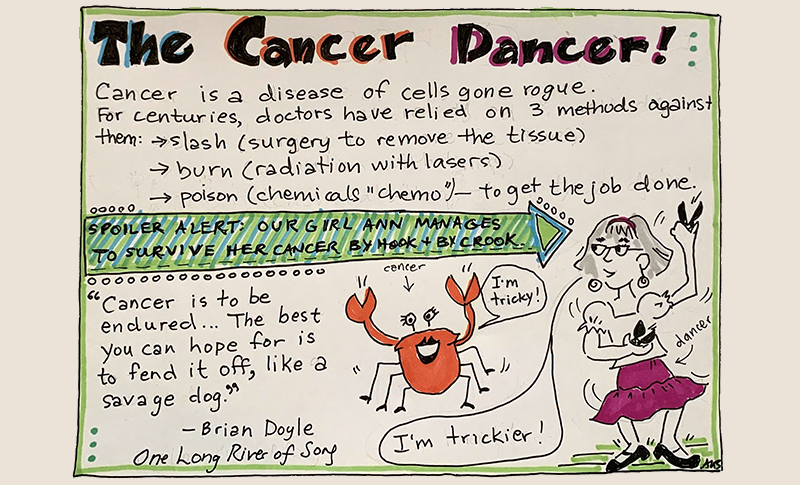



“We have your biopsy results…I’m sorry,” the surgeon intoned softly, “but it’s cancer—a squamous cell carcinoma of your oropharynx [throat cancer].” He went on to slowly outline the treatment plan and identify the oncologists who would be responsible for executing it. I thanked him with faux stoicism while starting to absorb the emotional gut punch with which many of you are unfortunately familiar. A PET scan was soon necessary to localize the tumor prior to x-ray radiotherapy and chemotherapy. The next 4 pretreatment weeks were a crash course in oncology—both from the medical professionals as well as through self-education. But I had to know how I developed this malignancy. Numerous preclinical screenings included the questions “Do you use tobacco? Drink alcohol regularly?” No and no. Those were the 2 traditional high-risk factors for throat cancer. I recalled that both Ulysses S. Grant and Babe Ruth died of throat cancer and that their lifestyles enhanced their chances to develop it. But I wasn’t in their club. Of course, I grew up in an era in which smoking was quite common in most public places—even on airplanes. Ashtrays were everywhere. Did secondhand smoke predispose me for this malignancy?
Self-education begins by carefully reading any diagnostic document your oncologists give you. Don't be shy about asking them detailed or delicate questions.
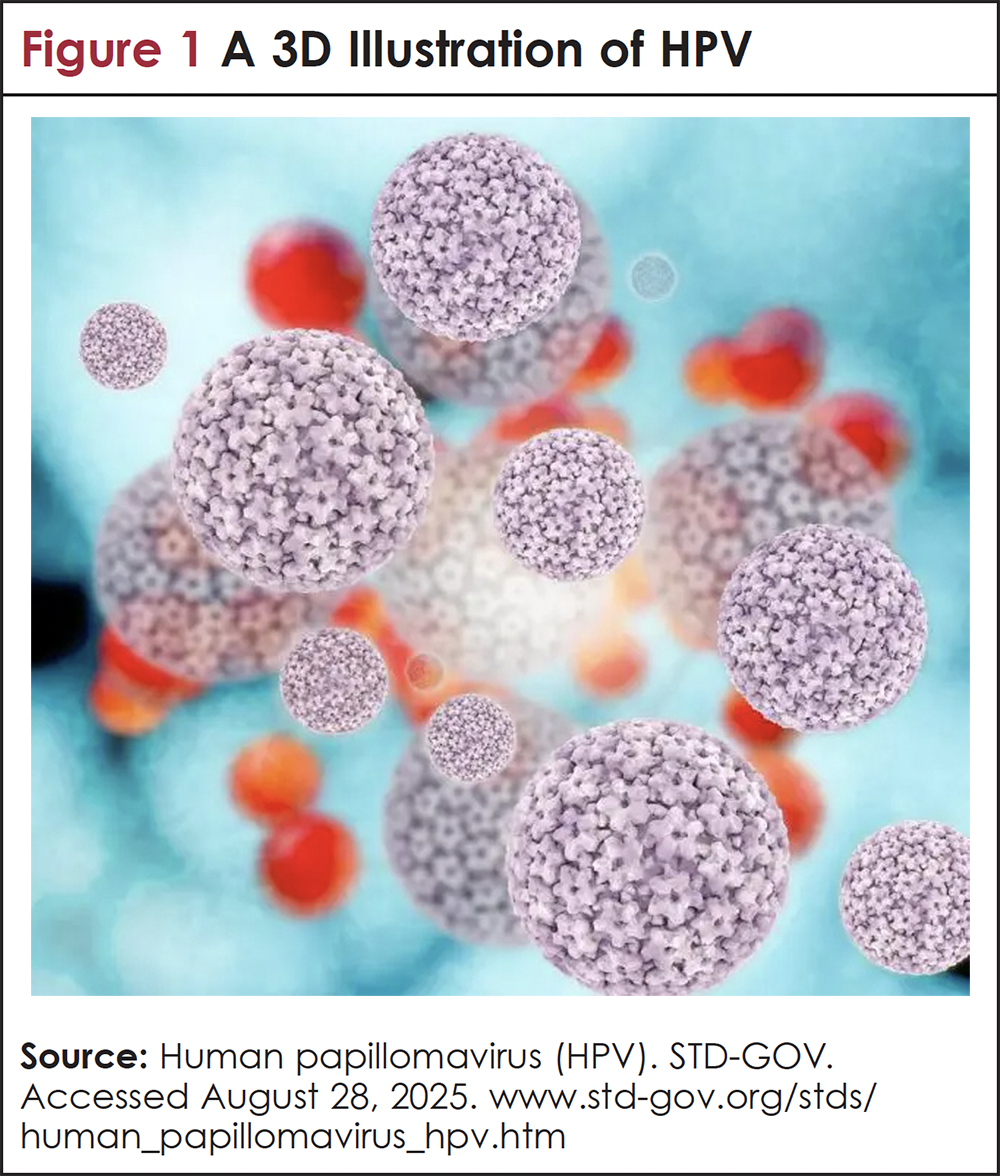
Self-education begins by carefully reading any diagnostic document your oncologists give you. Even if you own a medical dictionary, don’t be shy about asking them detailed or delicate questions. Terms like oropharynx, squamous cell carcinomas, regional lymph nodes, and a flood of medical acronyms needed to be defined for me. One mysterious line on my diagnosis sheet shared by my oncologist said “HPV16-positive” within its molecular analysis. HPV refers to human papilloma virus1 (Figure 1). This was critical because its presence guided treatment plans for my disease.
HPV Is Common In People
The majority of us will harbor HPV at some point in our lives, usually without much notice. More than 100 strains of this virus exist. Fortunately, this is more of a nuisance than a deadly disease. Warts, or benign neoplasms, located on various parts of the human body are caused by HPV. These warts include the common wart, flat warts, genital warts, and plantar warts on the feet.2 These manifestations of the virus will not cause cancer. Malignancies have been most often linked to the HPV16 and HPV18 strains of this virus.3 The American Cancer Society has estimated there are about 60,000 new cases of cancer of the oropharynx or oral cavity per year.4
HPV And Throat Cancers
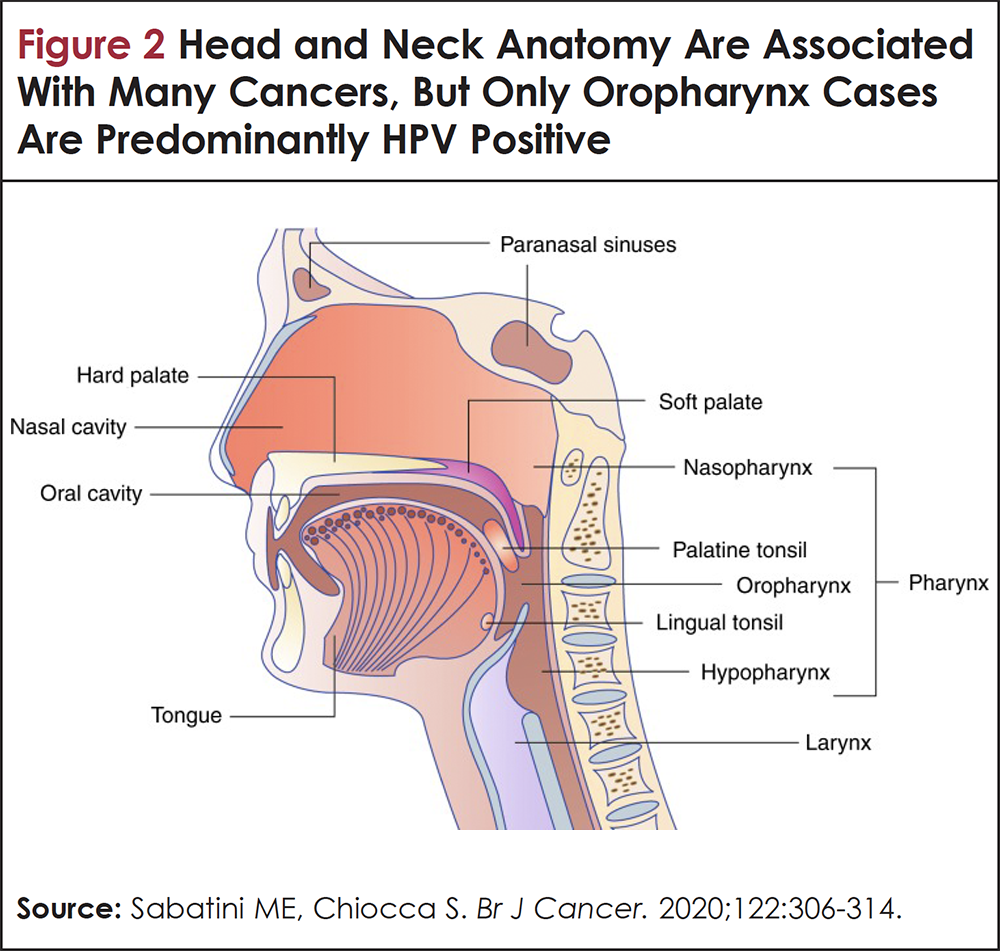
Head-and-neck squamous cell carcinomas have never been ranked among the top 10 leading causes of cancer in the United States. Sites include the larynx, nasopharynx, laryngopharynx, palatine tonsil, etc (Figure 2). Since my malignancy was classified as an oropharynx squamous cell carcinoma (OPSCC) located in the back of my throat near the base of the tongue, I decided to focus my self-education on that. Unfortunately, as I learned more about the medical world’s current view of the disease, even more annoying questions arose. The HPV16-positive cases (without alcohol/tobacco involvement) were most often assumed to be from oral sexual contacts.5 Once again, I chafed: Neither was I in that club!
HPV And The Stigma Of Sexually Transmitted Infection
Recall that HIV, the viral cause of AIDS, was first classified as a sexually transmitted infection (STI), giving it a social stigma. However, during the 1980s it became clear this was not its exclusive method of transmission. Many cases originated from contact with unscreened bodily fluids, especially from blood transfusions. The same etiology is even more obvious in OPSCC. It was initially assumed that the presence of HPV16 in OPSCC was linked exclusively to oral sexual contact, but this is no longer the case.3,6 More and more cases seem to be arising from neither tobacco/alcohol excess nor multiple sexual contacts. How did this happen?
Fomite Transmission
A fomite is any inanimate object that is capable of transmitting disease from one host to another7 (eg, contaminated scalpels, bedding, towels, drinking cups, utensils, or toothbrushes). Hand-to-mouth transmission also must never be taken lightly. Evidence is accumulating that HPV can survive outside the human body for longer periods than originally assumed. Hospital disinfectants as well as alcohol-based hand sanitizers are not effective in eliminating it.3 Slowly the puzzle was fitting together. Evidence is accumulating that HPV-initiated cancers also originate from more casual (nonsexual) contacts, including fomite transmission, a fact that must prompt us to monitor a larger potential population of victims.
The good news: identifying a specific virus as the culprit can lead to a specific vaccine to prevent transformation of normal human cells into cancer cells.
HPV Oncogenesis
HPV neutralizes the actions of at least 2 important growth control factors coded for by “tumor suppressor genes” known as p53 and RB.8-10 When the proteins coded by these genes are compromised by HPV activity, normal human cells often lose growth control and transform into cancer cells. Strain HPV16 was most frequently associated with this process in the development of throat cancers, dramatic evidence into how a human virus can initiate a cancer. The good news: identifying a specific virus as the culprit can lead to a specific vaccine to prevent transformation of normal human cells into cancer cells.11 The presence of HPV in itself increases the risk for future carcinogenesis. Sometimes a precancerous change, known as a dysplasia, may occur. This may or may not become a cancer later. New anti-HPV vaccines are constantly improving in their cancer prevention value.11
HPV is the most common viral STI in the United States.12 Presently, at least 60% of all throat cancers are associated with the presence of the HPV16 virus. As mentioned, there are about 60,000 new cases of throat cancer in the United States annually, which is an unanticipated rise in the growth rate.1,13 It occurs in men aged 18 to 69 years at least 3 times the rate in women.1 Oncologists have noted this dramatic shift in the percentage of HPV16-positive cases over the past 2 decades. This is a paradigm shift with respect to diagnoses for throat cancers traditionally linked primarily to alcohol/tobacco use (which declined over that period). Fortunately, treatment responses of patients with HPV16-positive cancers were also more favorable than in throat cancer patients without HPV!13
HPV Biomarkers And Vaccines
To prevent cervical cancers, HPV vaccines are common and recommended for adolescent females. It was assumed that only “high-risk behavior” individuals (ie, those with many sexual contacts) should be candidates for a vaccine. But this assumption breaks down, especially with respect to throat cancer. New trends in HPV16-positive OPSCC cases have revolutionized the medical world’s approach to treating and preventing such malignancies through vaccine development.6,11,14,15 The detection of HPV antibodies in blood sera presents a valid biomarker indicating a predisposition for developing a cancer up to 10 years prior!16 Will public health entities also recommend anti-HPV vaccines to prevent oral cancers as well? Any cancer that is growing in prevalence, like HPV-associated OPSCC, deserves such scrutiny.
Whatever the origin, let’s attack this new wave of HPV-induced cancers without presumptions or stigma. The risk of acquiring the virus is clearly more ubiquitous than previously assumed. Let’s treat them all aggressively and universalize the use of biomarkers and preventive vaccines, including for the monogamous and the celibate.
Summary
- There are numerous types of human papilloma virus (HPV) that infect people. Most are noncarcinogenic but may produce warts on various body parts.
- The presence of particular strains of HPV increases the risk of developing cancer by transforming normal cells into cancerous ones.
- HPV may be transmitted sexually or nonsexually between hosts.
- HPV is resistant to sanitizers and many disinfectants, and the virus may be transmitted to human hosts through fomites.
- More than 60% of throat cancer cases are now associated with HPV. Most occur in men.
- Treatment of HPV-positive throat cancers has proven more efficacious than treatment of HPV-negative ones.
- Vaccines have been developed that can prevent HPV-infected cells from developing into cancers.
- Antibodies to HPV16 in the blood can be a biomarker for a predisposition to throat cancers.
References
- American Cancer Society. What is HPV (human papillomavirus). May 30, 2025. www.cancer.org/cancer/risk-prevention/hpv/what-is-hpv.html
- Cleveland Clinic. Warts. Updated October 21, 2024. my.clevelandclinic.org/health/diseases/15045-warts
- Ryndock EJ, Meyers C. A risk for non-sexual transmission of human papillomavirus? Expert Rev Anti Infect Ther. 2014;12:1165-1170.
- American Cancer Society. Cancer Facts & Figures 2025; page 4. www.cancer.org/content/dam/cancer-org/research/cancer-facts-and-statistics/annual-cancer-facts-and-figures/ 2025/2025-cancer-facts-and-figures-acs.pdf
- American Cancer Society. Risk factors for oral cavity and oropharyngeal cancers. Updated March 23, 2021. www.cancer.org/cancer/types/oral-cavity-and-oropharyngeal-cancer/causes-risks-prevention/risk-factors.html
- Petca A, Borislavschi A, Zvanca ME, et al. Non-sexual HPV transmission and role of vaccination for a better future. Exp Ther Med. 2020;20:186.
- Slonczewski JL, Foster JW, Zinser ER. Microbiology: An Evolving Science. 5th ed. WW Norton & Co; 2020:G-10.
- Kitajima S, Li F, Takahashi C. Tumor milieu controlled by RB tumor suppressor. Int J Mol Sci. 2020;21:2450.
- Bouzid A, Ani MA, de la Fuente D, et al. Identification of p53-target genes in human papillomavirus-associated head and neck cancer by integrative bioinformatics analysis. Front Oncol. 2023;13:1128753.
- D’Souza G, Kreimer AR, Viscidi R, et al. Case-control study of human papillomavirus and oropharyngeal cancer. N Engl J Med. 2007;356:1944-1956.
- Alisson E. Therapeutic vaccine developed for diseases caused by HPV. Medical Xpress. June 12, 2025. https://medicalxpress.com/news/2025-06-therapeutic-vaccine-diseases-hpv.html
- Cleveland Clinic. HPV (human papillomavirus). Updated October 21, 2024. https://my.clevelandclinic.org/health/diseases/11901-hpv-human-papilloma-virus
- Mallen-St. Clair J, Alani M, Wang MB, Srivatsan ES. Human papillomavirus in oropharyngeal cancer: the changing face of a disease. Biochim Biophys Acta. 2016;1866:141-150.
- Kreimer AR, Johansson M, Yanik EL, et al. Kinetics of the human papillomavirus type 16 E6 antibody response prior to oropharyngeal cancer. J Natl Cancer Inst. 2017;109:1093.
- Rosenberg AJ, Perez CA, Guo W, et al. Breaking ground in recurrent or metastatic head and neck squamous cell carcinoma: novel therapies beyond PD-L1 immunotherapy. Am Soc Clin Oncol Educ Book. 2024;44:e433330.
- Fakhry C, Westra WH, Wang SJ, et al. The prognostic role of sex, race, and human papillomavirus in oropharyngeal and nonoropharyngeal head and neck squamous cell cancer. Cancer. 2017;123:1566-1575.
About the Author
Dr. Marley currently teaches within the faculty of the Department of Microbiology
& Molecular Genetics at Oklahoma State University. He holds a PhD in microbiology
and molecular biology from the University of Maryland (at Baltimore) and an
MSc degree in pathobiology from the Johns Hopkins Bloomberg School of Public
Health. In 2023, he was successfully treated for throat cancer at the Stillwater
Cancer Center in Oklahoma. He can be reached at