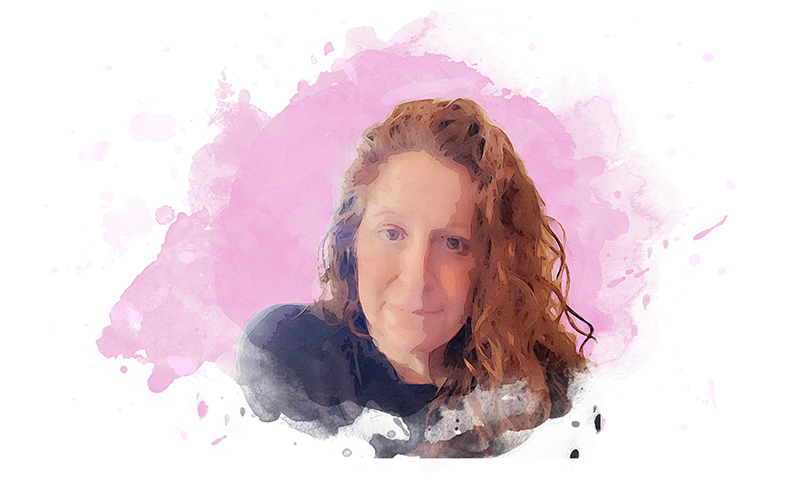



Teams of oncologists describe what metastatic melanoma can ultimately do to me. When I look in the mirror I can see for myself what it has already done. Seven-inch scars across my upper back and down the center of my abdomen. Biopsy scars and smaller excisions everywhere else. Not from melanoma, but from basal and squamous cell carcinomas that emerged afterward. The essence of who I once was has changed completely. Skin cancer, and melanoma in particular, has been destructive. Much of what I’ve worked toward, including my retirement years and life savings, has been diminished. Metastatic melanoma has forced a multitude of unwelcome changes upon me. Yet, what is it that this advancing cancer cannot do?
Metastatic melanoma cannot conquer my spirit. I’m not sure when, but as a young child I somehow internalized the dichotomy, “Does it control you, or do you control it?” Where does the locus of control reside: primarily within me or within outside forces?
With further schooling, I learned about manifest destiny. Lo and behold, I could better manifest elements of my own destiny by centering with an internal locus of control. I have always tried to get clear in my heart, focusing on what I want and need, what is right and good for me. I make my intentions known. I ask the greater universe for what I want, am specific about it, and then release. I welcome in desired outcomes, yet do not attach to them. Sometimes I get needs fulfilled in manners I least expect.
Yet, as rogue cancer cells spread to different parts of my body, I was thrown off my game. Cancer gained the upper hand and began dominating all aspects of my life. After results of a postsurgery whole-body PET-CT found more new tumors, what I had internalized as a child came rushing back. If my soul was to survive, I had to regain that inner locus of control that had always grounded me.
You can’t control this type of cancer; it’s tricky, invasive, outsmarts immunotherapy drugs. All of that may be true; however, I can control how I choose to respond cognitively. Meaning, how I conceptualize the tumors. Deliberately reframing. Turning my thoughts toward the upsides and benefits of the experience and what I might learn from cancer as my teacher.
Because the loss column often outweighs any gains, I must purposely create balance. How I choose to view and think about my cancer situation has a lot to do with how I feel about it.
Because the loss column often outweighs any gains, I must purposely create balance. How I choose to view and think about my cancer situation has a lot to do with how I feel about it. I can usually change mood and emotion by changing perspective. Whatever situation I find myself in, especially one with elements beyond my control, I try to embrace and define for myself. I manifest my own destiny by controlling how I think about things.
Yet, through this metastatic journey that has lasted for over 6 years, I cannot live only inside my head. I must intermingle head with heart. I have learned to rely on gut intuition and what the voice inside of me is communicating. Does this feel right? How am I feeling right now as I think about all the complex information and decisions? Mitigating the impact of strong emotion arising from the metastases—all the fear, anxiety, anger, sadness, grief—has been as vital as the immunotherapy drugs I’m infused with.
My body as host. In transforming the way I think about my cancer, I have called a truce to coexist with intestinal tumors that have become my guests. Surgeons have chased them around in a game of whack-a-mole. If growths are to remain present and the cells comprising them resistant to treatment, then together we must learn to get along. One friend called my tumor a hitch-hiker. A dive buddy said the recurring tumors were suckerfish. Another described the tumors as a roommate I had to live with, but not necessarily like. As host, I often speak directly to the proliferation of cells, reminding them to behave and follow basic rules of coexistence.
In speaking to my tumors, I imagine what they look like. I visualize each from what I see on PET and CT imaging. In Okinawa, a Japanese surgeon once removed a fist-sized tumor enveloping my small intestine. To get clear margins, he resected 2 feet of intestine on either side. The surgeon later walked out of the operating room holding a basin containing the entire 4 feet of resected small intestine with its dark, malformed tumor mass. In a private waiting area, he presented the specimen to my spouse, who then took photos. Thus, I was able to come face-to-face with the interloper who had broken the rules of coexistence and had to be evicted.
Visualization has been a game changer in other ways. It has helped me relax and ease into the 16 claustrophobic whole-body PET-CT scans I’ve had to endure, including when a cage is placed over my face during a banging, clanging brain MRI. I take control over my anxiety by visualizing a walk through a pine forest or across a deserted beach; a radiant sunset; full moon rising over granite peaks; fields of sunflowers; canoeing across a lake surrounded by the changing colors of autumn; scuba diving in a coral reef, the swaying soft corals alongside me with all the reef fish I know by name.
I have lived the balance of my life overseas, purposely choosing dwellings close to my favorite elements of nature, those being trees and water. Particularly any type of water with a kinetic quality, whether streams, waterfalls, or the changing tides of an ocean, all of which I associate with cleansing and renewal. I have been a walker and explorer my entire life, almost always through wooded areas. In Japan, I was introduced to shinrin-roku, literal translation “forest bathing,” which is the practice of taking mindful walks to experience therapeutic relaxation while connecting with nature in fresh air. Walking through a pine forest is said to provide additional benefit from substances released by pine, such as phytoncides and terpenes.
Until I was plagued by different types of skin cancer and sprouting tumors myself, I never paid much attention to trees in a forest having weird growths on their bark. Sometimes it’s a huge knot or bulge, but effectively, a visible tumor. Other trees covered in moss or fungus are akin to my own basal and squamous cell carcinomas. Still others might be hollowed out and dead from invasion and disease progression. Cancer has transformed the lens through which I view a forest.
Yet despite weird growths, many of these trees stand tall and strong, flourishing to great heights. They inspire survival. I will talk to them while forest bathing and chant out loud expressions of what I specifically need, “I welcome in positive treatment response from Opdualag! Heal thy mesentery and small intestine!” I wish to thrive and stand as tall and strong as these majestic pines with similar affliction.
In regaining internal locus of control, I also cry a lot. Like windshield wipers helping me to see where I’m headed during a hard rain, crying not only washes over my eyes to result in clearer vision but also acts as a steam valve for cathartic release. For me, metastatic cancer keeps adding to the loss column, so sadness and despair are common triggers to bring on tears. Whereas previously I was prone to holding back, cancer has taught me the value of a good, long, deep sob. Crying almost always helps me regroup and strengthen my resolve. Without cathartic release through crying, I find it hard to get unstuck from negative emotion and move on.
While having 5 vials of blood drawn along with 7 more for the research team, I fixed my gaze on a nearby poster: Triumph over Tragedy. My situation has indeed been tragic, yet I have conquered enough elements of it to maintain control. How do I go forward using what I’ve learned with cancer as my teacher? Thankfully, adversity has always fueled my growth as a person. Even when the outcome is failure or loss (or in the case of cancer, death), I still gain more at the end than I had going in.
Cancer has created a new normal, both inside and out. I accept that what will be, will be. Metastatic cancer has proven that trying to control the things I cannot change is futile.
Existential quandary. Who am I now? The transformative nature of metastatic cancer has redefined the essence of who I am and altered my physical appearance. Cancer has created a new normal, both inside and out. I accept that what will be, will be. Metastatic cancer has proven that trying to control the things I cannot change is futile. Rather than fight against, I call a truce to coexist. Through this long journey, I can only control my perspective and how I feel. I have evolved into living simply within manageable chunks of time, even if hour by hour. I take things one day at a time, remaining present. I may not be in the clear from further metastases, but for now, I remain in the moment.
The ESSAY column in Conquer is devoted to lifting the voices of people touched by cancer.
Read more essays or submit yours.