


Biomarkers in oncology have been around since 1845 when Henry Bence-Jones first identified immunoglobulin light chains in the urine of a patient with multiple myeloma. This discovery marked the beginning of research into tumor biomarkers. Over time, they have been used to diagnose cancer, predict the course of the disease, and assess a patient’s response to treatment. Currently, they are expected to play a key role in the early detection of cancer and in the development of personalized treatments.
What are Biomarkers?
The word biomarker is derived from bio, meaning relating to life or living things, and marker, representing a measurable substance whose presence in an organism is indicative of disease, infection, or environmental exposure. With the advancements in genomics, many markers are often referred to as DNA random sequences, genomic variants, or genes. A biomarker is a measurable molecule in tissue, blood, or other bodily fluids that can indicate a disease, abnormal condition, or biological process.
What Other Terms Are Used When Referring to Biomarker Testing?
The healthcare team may talk to you about genomic tumor testing, molecular testing, nextgeneration sequencing, tumor markers, tumor profiling, molecular markers, genotypes, or signature molecules. A biomarker test looks specifically at the genetic errors and other changes in your cancer cells. It does not provide information about genes you were born with.
How Do Biomarkers Relate to Disease?
Cancer is caused by certain changes in genes or small pieces of DNA that are the blueprints of how a cell should function. The changes or variants are acquired during one’s lifetime as the result of wear and tear from the environment and/or lifestyle choices. Biomarker testing analyzes acquired variants at the cellular level of the cancer. Again, the genes being studied are not inherited from your parents, nor can they be passed on to your children.
Why Is Biomarker Testing Performed?
Biomarker testing is used to find variants, changes, or other tumor markers that are present in cancer cells. The testing can indicate a change in protein expression that correlates with disease risk, progression, or susceptibility to treatment. The test results can reveal a prognosis or how cancer may progress. By understanding how your cancer is expected to act, the healthcare team can make better-informed decisions on how to treat the disease. With the test results, the healthcare team can choose the best medicines to treat your cancer because certain biomarkers can be targeted with these treatments, which are labeled targeted therapies or immunotherapies. Obtaining the information about what is going on inside a cancer cell enables healthcare professionals to use that information to create treatment to target what is causing the cancer to grow.
Biomarker testing is an expanding field, and everyone who is assessed may not have a marker correlated with a targeted treatment. Since some targeted treatments are available only through clinical trials, please ask your healthcare provider about trials that may be an option for you.
Overall, biomarker testing can help determine if disease is present, diagnose disease, establish disease aggression, predict patient response to treatment, and assess the impact of medications in clinical trials.
How Is Biomarker Testing Done?
Since biomarker testing is a laboratory procedure that analyzes samples of tissue, blood, or other bodily fluids, it requires a piece of tumor tissue, blood, or fluid that contains cancer cells so genetic changes and proteins can be assessed. Tumor tissue may be available from a biopsy done to diagnose cancer, or a blood sample may be needed.
Your cancer care team will sort out what is needed and arrange for samples to be sent for biomarker testing. The sample is sent to a lab, and a report is created that will list the biomarker. The report goes back to the healthcare team member who ordered it, and the results are discussed with the patient to decide on a treatment plan. The results can diagnose cancer, offer insight to plan treatment, as well as determine how well treatment is working.
Are There Risks to Biomarker Testing?
Biomarker testing results can take 5 days to 4 weeks, depending on the type of test and whether it needs to be performed at an outside lab rather than your healthcare facility. The waiting can cause anxious feelings.
The results may identify genomic biomarkers that have uncertain meaning or significance for your treatment, or they may identify biomarkers that cannot be treated. The report could return a message that there was not enough tumor tissue in the sample for biomarker testing. These results can lead to disappointment.
The test result may suggest a medicine that is not covered by your insurance or treatment in a clinical trial that is available only at a distance from your healthcare facility or home, which can increase distress. Some biomarker testing is covered by insurance, but coverage varies by plan and state.
To minimize these risks, the healthcare team will provide education on the process of testing, possible results, and normal wait interval. There is regulatory oversight from agencies like the Food and Drug Administration (FDA), and the Clinical Laboratory Improvement Amendments provide guidelines for clinical testing environments that address tissue samples for testing.
Also, the results could spare you from getting a treatment that would not help if the results showed the cancer has a biomarker that could prevent a therapy from working. In some instances, based on test results, the healthcare provider may recommend a treatment that is not FDA approved for your cancer type but is approved for the treatment of a different type of cancer that has the same biomarker. This is called an off-label treatment, but it may work because the cancer has the biomarker that the treatment targets.
Does Everyone With Cancer Need Biomarker Testing?
Not everyone with cancer needs biomarker testing, but it is often recommended for certain types and stages of cancer. As this science evolves, there are studies to see whether circulating tumor markers can be used to screen for cancer. At the current phase of development, the markers are not sensitive enough to identify everyone with the disease, and they are not specific enough since they may indicate the possible presence of cancer in people who do not have cancer. But work continues via clinical trials on this aspect of care.
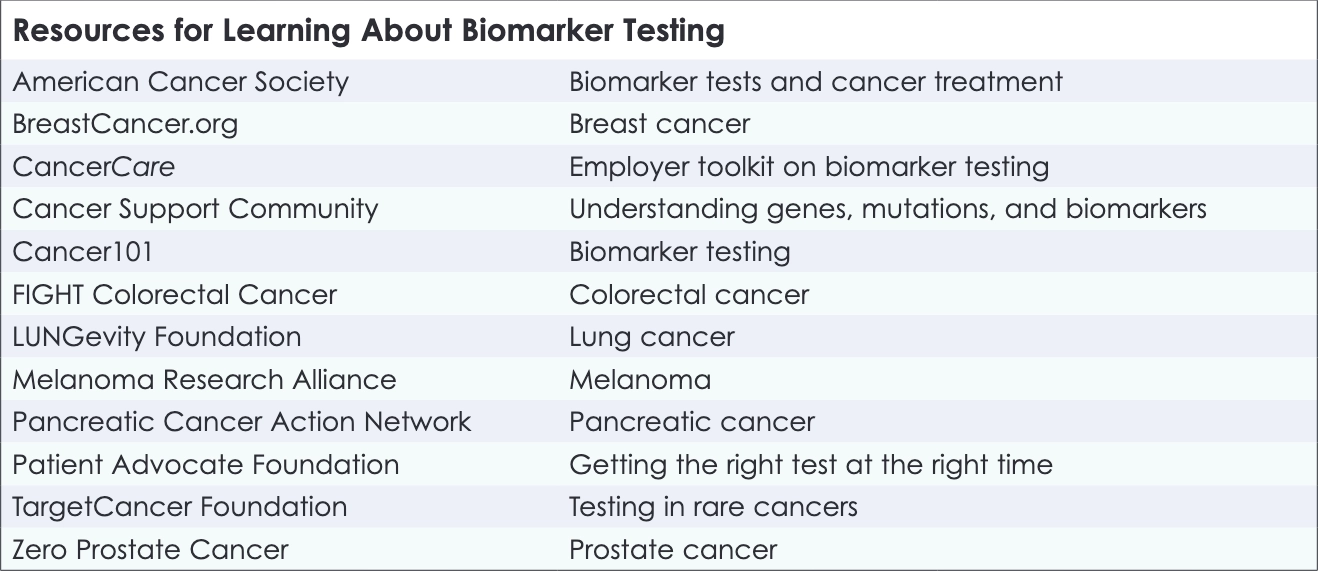
Download a list of resources where you can learn more about biomarker testing.